Home
Lower Fasting Sugars
Lunch Sugars
Supper Sugars
 Bedtime Sugars
2 hr Post Prandial
Insulin Pumps
Pump Tips
Glycemic Index
Guidelines
A1c Blood Test
Glucose Meters
Meter Accuracy
Diabetes Symptoms
Hypoglycemia
Hypo Symptoms
Treat Hypoglycemia
 Hypo Causes
Sleep & Diabetes
Food Strategies
TRAVEL PRECAUTIONS
News & Nuggets
Ticked off?
Site Map
Stress
Blood Sugar Blog
About the Author
Terms of Use
Contact
 Search

[?] Subscribe To This Site

XML RSS
Add to Google
Add to My Yahoo!
Add to My MSN
Subscribe with Bloglines


13 Solutions for Better Blood Sugar Testing Results at Bedtime

To explain high fasting sugars, diabetes educators first look for high blood sugar testing results AT BEDTIME. How do I know? I'm a diabetes educator and dietitian (who also happens to have diabetes.) Let me share some insight with you.

The Mistake People Make


Many diabetics believe that lowering fasting glucose levels is the only thing they must do. Don't make that mistake.

You are at risk for the high blood sugar effects of eye, kidney and nerve damage if you have frequent high sugars ANYWHERE in your day.

That especially includes bedtime. If you go to bed with high blood sugar testing results you could be sleeping through a third or more of your day with high blood sugar levels.

This page contains a list of solutions for lowering blood sugars at bedtime. But don't stop here - if you are high elsewhere in your day your can view more specific solutions for how to lower blood sugar when fasting, at lunch or at supper. To limit frustration please consider reading the essential 4 steps for lowering blood sugar testing results on the home page.

Sometimes the bedtime target for blood sugar testing results is set at greater than 126 mg/dl or 7 mmol. This is to avoid low sugars during the night for people on certain diabetes medications. This is a guideline only. Most of the people I see are confident and safe to aim for pre-meal blood sugar targets at bedtime. For complete blood glucose guidelines see here. Please talk with your doctor about safe blood sugar testing targets and strategies for you, as is advised in the disclaimer. The blood sugar testing information on this site is for information purposes only.

Wait! Make sure your meter is accurate and your blood sugar testing strips aren't outdated. You'd hate to waste time, money and emotions on erroneous data. ( I've got lots of other things I'd rather waste money on!) Also, be sure you have enough blood sugar testing results at bedtime. You don't want to jump through hoops because of 1or 2 wacky high numbers. You want a majority of blood sugar testing results to be high at bedtime before you put your effort here.

Solutions to Lower Blood Sugar Testing Results at Bedtime.

  1. The "goof" doctors and educators sometimes make. Read here . . .
  2. Eat less carbohydrate foods at supper.
  3. Have a healthier supper.
  4. Have a lower glycemic index supper.
  5. Try a carbohydrate management method.
  6. Have a smaller, healthier or lower glycemic index bedtime snack if . . .
  7. Do 10-20 minutes activity after supper.
  8. Remember to take supper diabetes medication on time.
  9. Reduce high blood sugar levels before supper.
  10. Reduce or manage evening stress or chronic stress.
  11. Check your records . . . the answer might already be there! Maybe you just haven't looked.
  12. Lose 5-10 pounds.
  13. See your doctor for medication changes, additions or even insulin pump therapy.

1. The "goof" even doctors or educators sometimes make. Read here . . .. If you have a snack 1-2 hours before you do your bedtime blood sugar testing, then you are not aiming for the pre-meal glucose targets of 90-130 mg/dl(US) or 4-7 mmol/l (Canada) at bedtime. Healthy or normal glucose levels for diabetics after eating are less than 180 mg/l or less than 10 mmol. Some of the research advises less than 140 mg or 8 mmol.

Now, what goof do educators and doctors sometimes make? We sometimes assume that blood sugar testing at bedtime is done before eating the bedtime snack. Oops. We sometimes assume that the patient always has a bedtime snack. Oops. We sometimes assume that if patients say they do blood sugar testing before the snack that they are always testing before. Oops. We sometimes assume that bedtime is at least 3 hr after supper. Oops .. . Some patients when asked will say that they might have a bedtime snack some days, but not others, but they always test right before bed. Okay, that's life but which of their bedtime tests are within 2 hrs of eating and which are more than 3 hrs away from any food? Hmmmm.

The best way for you to interpret your results and overcome this confusion (and all the annoying questions that we educators ask) is to record in your log book if the blood sugar testing is done 2 hr or less after eating. You could circle it. Or place it in a column that says "after snack test". Or you could code it in your meter (if your meter allows for this). Or you could get into the habit of always always doing blood sugar testing before the bedtime snack. (and record if you had a snack). The important thing is that you know how to interpret your own meter readings.

After blood sugar testing you should ALWAYS ask yourself this question:

"When did I last eat carbohydrate food (starch, fruit, milk or sweets) so I know what this number should be reading?"

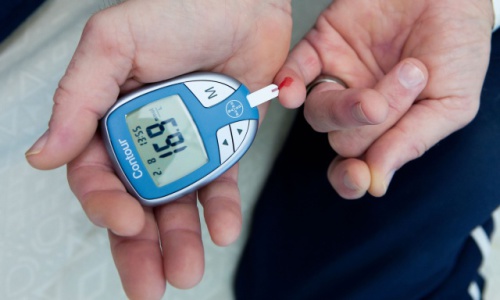
For example, I just did blood sugar testing on myself now. My meter reads 163 mg/dl (9 mmol/l). Am I in target ?.... Aha, you don't know do you? Well you shouldn't know. Not till l tell you that I ate a multigain bun 1 hr ago. Now, have at 'er (sorry, my husband is a Newfie). Did you get it? Yes, I'm in target. If I had told you I ate it 3 hrs ago, then NO, I wouldn't be in target.

back to solutions list

2.Eat less carb at supper. Blood sugar testing readings at bedtime are usually a reflection of how well your body used your carbohydrate from supper. Reducing the amount of carb at supper can help reduce your blood sugar testing results at bedtime. Notice that I did not say to avoid carb foods at supper. After all, I'm a dietitian. I know that wholegrains, fruit and milk help reduce heart disease, manage cholesterol, blood pressure, weight and the risk for cancer. I wouldn't tell you to eliminate the chance of a healthy future just to satisfy a meter reading at bed. Not when there are other methods of getting that great glycemic control. But, if you are overeating carb foods at supper, then cutting back can make a difference to blood sugar testing results at bedtime.

There are numerous ways you can gauge your portions but a general rule of thumb for meals is to limit starches to "1 fist" or 1-1.5 cups per meal; fruits to 1 piece or 1 cup per meal; milk to 1 cup per meal. I'll be working on a portions page down the road to give you various different ways to determine healthy portions. Be sure to consult your dietitian.

back to solutions list

3. Have a healthier supper. In other words, less fries, less fat, more fibre, more vegies, more food groupos. A "healthy" supper has many benefits wrapped into one package. A "healthy supper" would include foods from all the food groups: grains/starch; veg/fruit; milk; protein and healthy fats. I often see people who get better blood sugar testing results simply by trying to eat suppers like the one's "mom used to make."

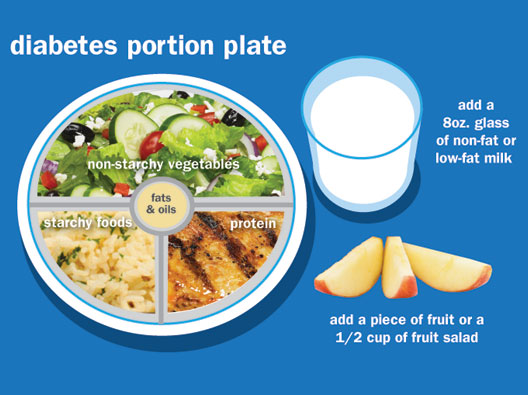
The Smiling Plate
An easy way to do this is to portion your plate into a "smiling" plate where one quarter (or one "eyeball") is a high fibre starch; one quarter (or one "eyeball") is protein/meat/chicken/fish etc and half the plate (yup, the smile) is colorful vegies. Then add a fist-sized piece fruit to the side and a "fist" of milk or yogurt to the other side. And a thumbful of healthy fats. Voila! Instant portion control for carbs and for calories. Instant assortment of antioxidants, flavinoids, vitamins and minerals to help with blood pressure, heart health and cancer risk. And, the milk and most fruit would naturally cause slower rises in glucose levels.See below.

back to solutions list

4. Have a lower glycemic index supper. Low glycemic index foods like barley, converted rice, legumes, baked beans, bulgar (you can use it like rice - add onions and broth!) most fruit, milk and yogurt can have less effect on blood glucose levels than equivalent carbohydrate portions of mashed potatoes, white bread, sticky rice or french fries. For a stint there I was eating instant mashed potatoes. My, my! What that did to my blood sugar testing results! Instant mashed is even faster than mashed from scratch. Now boiled potatoes are slower than mashed. Arrr, is this enough to drive you nuts? Why don't you do some testing 2 hr after meals to see which foods you are lower after. Don't make assumptions. I can't tell you how many people I've seen who are amazed that a chunk of chocolate doesn't put them over target. Even if you learn that a food is low glycemic index (like pasta - yes it is slow) REMEMBER that portions plays a role too! If you overeat slow foods you'll still get high sugars. Well, usually. Everyone's response to food is different, so experiment using blood sugar testing.

back to solutions list

5. Try a carb management method. Some people work with their educators to fine tune the medications around their food. There are numerous ways of doing this. The least flexible is the standard exchange diet. Then consistent carb - where you try to always eat the same amount of carb at breakfast daily, at lunch daily etc. (but what you eat for that carb can vary). Then there are various forms of insulin to carb ratios where you work with your dietitian/nurse to determine how much carb works with 1 unit of fast or rapid insulin. Or, an alternative, how many units of rapid insulin are required for every carb serving (15 g carb). These last two are the most flexible. Please speak to your dietitian to see if these methods are appropriate for your medication schedule and your life.

back to solutions list

6. Eat a smaller, healthier or low glycemic index bedtime snack. If your bedtime just happens to be 3 hr or more after your bedtime snack and your blood sugar testing result is still over target, you could try any of these options. See above for details on glycemic index. Keep in mind that snacks are typically smaller than meals. Maybe you only need 10-20 g carb at a snack (like a fruit only or a starch only). I'm quite amazed by the number of people I see who eat bedtime snacks that are equivalent to meals.

By the way, low glycemic index snacks could be fruit and 2 tbsp nuts; a whole grain toast with peanut butter; a glass of milk; yogurt; oatmeal; bran buds or all bran. Even a small bowl of frosted flakes. Yup, they are slower than cornflakes. More explanation on why this is when I build the "glycemic index" page. In the future I will be adding pages specifically on how to get the most out of using food to help you manage your blood sugar testing results.

Remember, if your snack is only 1-2 hrs before your bedtime test you don't necessarily want readings of 90-130 mg/dl. Also, don't feel you "have to" have the bedtime snack. Check with your doctor or diabetes educator to see if that snack can safely be eliminated.

back to solutions list

7. Walk or do 10-20 minutes of activity after supper. Once again, exercise rules. Adding or increasing activity is an excellent strategy for decreasing those blood sugar testing numbers. (And managing blood pressure, weight, depression, cholesterol . . . yadda, yadda I'm rambling again.)

I've seen people with huge supper portions lower their blood sugar testing results at bedtime by adding in an evening walk. Even 10 minutes for some folk! I've seen people who do housework once a week in the evening and lo-and-behold, those are the only days they are in target by bedtime.

If you want to try extra activity, be sure to talk with your doctor/educator if you are on diabetes meds. Some of these medicines need to be cut in half to avoid hypoglycemia if exercise is being added soon after taking them. Sometimes the effect of the exericise can last for up to 24 hours so be watchful of what happens to your blood sugar testing results the next morning and the rest of the following day. You might be pleasantly surprised.

back to solutions list

8. Remember to take your medications as prescribed. Or ask for different meds. Research shows that people often forget to take medications as prescribed and this leads to higher A1c test results. If this is you, work with your pharmacist, doctor or health educator to come up with ways to help you remember OR to come up with a different schedule for taking your medication OR to come up with an appropriate one-a-day pill.

I can think of a handful of patients in the last month or so who frequently forget their supper pills and take them afterwards. This of course leads to high blood sugar testing results by bedtime. Much of the diabetes medication is meant to work WITH the meal. Taking it after the meal is like chasing the horse (or in the case, the high sugar) after it's gotten out of the barn. Much better to prevent highs than chase them.

back to solutions list

9. Reduce your high blood sugar levels before supper. Targeting high readings is often like solving a puzzle. Usually, we suggest people target the section of the day where the high readings first start. So, if bedtime is high and supper is high, you might want to first try to decrease your supper blood sugar testing results since the bedtime one's might fall into place afterwards.

back to solutions list

10. Reduce or manage evening stress or chronic stress. You've read this before but it's worth reading again. Stress management is critical for overall health! Stress causes the liver to dump more sugar into the bloodstream. It also results in making more hormones that works against insulin. I've had patients tell me their sugars elevated when their inlaws visited! Go figure. There is research to show that using relaxation strategies can lower the effect that stress has on blood sugar testing results.

Stress or depression can also be one of the reasons people overeat or binge eat in the evenings. Stress also impairs your ability to make and act on decisions. Any decisions- including those for health. I can think of a number of patients who are now making better day to day decisions regarding their health because they are being managed for their stress, anxiety or depression.

Stress also has horrid effects on blood pressure and heart health! (Stress contributes to heart attacks as much as uncontrolled high blood pressure!) Please seek help for managing stress or depression from your doctor, minister or counselor if you feel this is affecting your life.

Now if it's a short term stress like a cold or infection you might find your blood sugar testing results elevate but return to normal once the illness has resolved. However, they might not - so keep blood sugar testing and keep an eye on the results.

back to solutions list

11. Check your record book - the answer might be there. Frequently people keep great data but do not take the time to review or analyze that data (remember "A" in "U-ACT" means "Analyze"). IF you have fluctuating numbers at bedtime, sit down and review those records to see what happened the nights you were in target at bed. If you don't know, maybe start keeping more detailed records for that time of the day so you can pinpoint what causes the highs for you at bedtime and what leads to the healthy numbers.

back to solutions list

12. Lose 5-10 lbs . Sure, right away. Sorry for the sarcasm but I want to acknowledge that weight loss is hard. However, should you succeed at losing even a moderate amount of weight then your blood sugar testing results for the whole day might improve. Your insulin works better when you have less fat on board - even just 8-10 pounds less. Each month we see people who come off some or all of their diabetes pills because they have lost weight.

back to solutions list

13. See your doctor or health care team for help. If you are doing everything you can or want to - even though it may not be perfect - and still can't get most of those blood sugar testing results before bedtime into target, then you owe it to yourself and to the ones you love to seek more help. First review the comments under step 4 for "U-ACT" to see if they help.

Yes, you'll likely need medication changes or additions but remember . . . it is the high blood sugars that do the damage to your body, not typically the medication. If a pill or insulin could keep you here longer, healthier and happier would you consider it if all else didn't work?

If you're on insulin, keep in mind there are new insulin analogues out there. Some are long acting but still my run out by the evening. They may need to be taken at a different time of the day or even twice per day. If you are on many doses of insulin, you might consider investigating an insulin pump. It is the ultimate in handling basal insulin problems.

back to solutions list

BRAVO! You made it through this page. Even if you don’t try any of these solutions to lower your results from blood sugar testing, you are better informed about what your doctor or diabetes educator might suggest next.

If you picked a goal to try, ask yourself on a scale of 1 to 10, how confident do you feel that you can meet your new goal?” Research shows that your chances of meeting your goal are better than average if you rate your confidence as an 8 or higher. This of course does not mean it will work to fix your blood sugar testing results. You will have do your blood sugar testing, analyze and fine -tune to see if it does. Remember the steps to "U-ACT!"

If you answered 7 or less on the confidence scale, well, maybe the goal isn’t right for you. Or maybe it is too big a goal. Make it smaller. Remember SMART goals (Small and specific, measurable, acceptable, realistic, time frame).

Ready to move on? Find another "high chunk" of your day that you'd like to get lower blood sugar testing results at? If you're unsure where to start with your diabetes, review the 4 steps to "U-ACT". If you know where you want to work next, click on how to lower:

Fasting blood sugar testing results
High blood sugar levels at lunch
High glucose levels at supper

Good Luck & Good Health!


Leaving Bedtime Blood Sugars to go to Home Page


footer for blood sugar testing page