Acceptable Blood Glucose Level
18 tips to get them at supper
Getting an acceptable blood glucose level at supper could help lower half or more of your day's high blood sugar levels. Surprised?
If you've read the pages on how to get an acceptable blood glucose level when fasting, or at lunch, or bedtime or even 2 hr post prandial blood sugars, then you know the logic for this next tidbit. High blood sugar levels at supper might start after lunch and could continue through to bedtime (or longer!). That could be 10 or more hours of damaging unacceptable blood glucose levels unless U-ACT to prevent them!
DISCLAIMER: WWW.diabetes-blood-sugar-solutions.com is for informational and educational purposes only and not to be used as medical advice. By continuing past this notice you agree to the terms in the disclaimer. Thanks for keeping yourself safe!
BELOW IS A SPECIFIC LIST OF TIPS TO HELP LOWER BLOOD SUGARS AT SUPPER into an acceptable blood glucose level of 90-130 mg/dl in the U.S. or 4-7 mmol in Canada for people with diabetes. These levels are slightly different than acceptable blood sugar numbers without diabetes.
Good news: Any move towards an acceptable blood glucose level could reduce the risk of eye, kidney or nerve damage. It's hopeful and empowering to learn how much your risk for complications can be reduced by lowering your A1c (3 month average sugar) by just 1 percent! Read here to see that every effort to lower A1c counts.
If you’ve just joined this site: Please consider reading the 4 essential steps to achieving an acceptable blood glucose level. These are steps I use with my patients and myself (yes, I have diabetes too) to help target efforts and reduce frustration. TARGETING efforts is the trick here. That is why the solutions on this page have been fine-tuned and TARGETED to lower supper sugars. This is the approach taken by most diabetes educators. Also, please follow with your physician/diabetes team as this site is not intended to prescribe treatment strategies specifically for you.
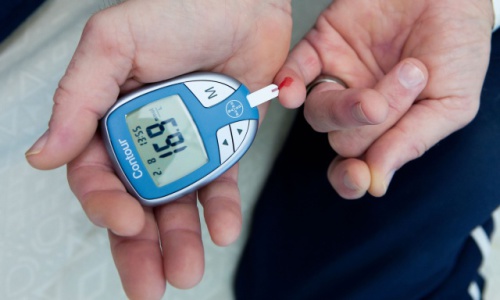
WAIT! Check that your meter and diabetes test strips are accurate so you don’t waste time, money, efforts and emotions on inaccurate readings.
A Real Timesaver: if most of your blood sugar counts at supper are within an acceptable blood glucose level then there's no need for you to read this page! (Unless you want to to satisfy curiosity).
Now, drumroll please . . .
Strategies for an Acceptable Blood Glucose Level at Supper.
- You might not be high after all. Read here . . .
- Have a smaller afternoon snack.
- Have a healthier or lower glycemic index afternoon snack.
- Omit afternoon snack ( talk with doctor FIRST)**
- Do 10-20 minutes activity in the afternoon.
- Try a smaller lunch.
- Try a healthier lunch.
- Try a lower glycemic index lunch.
- Try a consistent carb lunch.
- Try a carb budget at lunch.
- Try a carb management strategy for lunches that vary in size.
- Ask for medicine to handle "big lunches".
- If on insulin: Learn to use a correction dose with your rapid insulin.
- Remember to take diabetes medication on time.
- Lower your before lunch tests if they are high.
- Reduce or manage afternoon or chronic stress.
- See your doctor for medication changes or additions.
- Investigate insulin pump therapy if on multiple doses of insulin.
1. You might not be high after all. Read here . . . If you are like many people and have a snack 1-2 hours before supper, then you are not aiming for levels of 90-130 mg/dl(US) or 4-7 mmol/l (Canada) at supper. You are aiming for the acceptable blood glucose level of less than 180 mg/l or less than 10 mmol if 1-2 hrs after eating.
When looking at any diabetes blood test result, always ask yourself when you last ate carbohydrate food (starch, fruit, milk or sweets) so that you can interpret the number correctly.
I've seen so many patients waste emotion and frustration over what they thought was not an acceptable blood glucose level until they realized they had had an afternoon snack.
There's nothing worse than when us educators ask you, "Oh, see this day here, two Fridays from last week and the Thursday before. Did you have snacks there on those afternoons?". Arr! I hate those questions too. I apologize for all the times I've been stupid enough to ask such impossible things of your memory. Try marking an "s" in your logbook between lunch and supper so you'll know which days you ate an afternoon snack a few hours before supper. This might reduce your frustration when analyzing numbers.
back to solutions
2. Have a smaller afternoon snack. If you have an afternoon snack that is 3 hours or more before supper then your meter reading should ideally be back down to the acceptable blood glucose level of 90-130 mg/dl or 4-7 mmol/l by supper. If it isn’t you could consider eating less carbohydrate at that snack (less starch, fruit, milk, sweets). Perhaps more veggies? (Err, I think I heard my husband say 'dream on'. Hey, to each his own.) A reasonable snack might have 15 to 30 g carb. Check with your dietitian as everyone's needs are different. (Ahem . . .a coffee shop bran muffin might have 60 g carb after the fibre is subtracted! That's equal to 4 bread! Hard for many people to get an acceptable blood glucose level after that!)
back to solutions
3. Have a healthier or lower glycemic index afternoon snack. If you have an afternoon snack that is 3 hours or more before supper then an acceptable blood glucose level at supper is 90-130 mg/dl or 4-7 mmol/l. If it isn’t you could try a healthier snack. Of interest, healthier snacks like vegies, fruit, diet yogurts often have less carbohydrate and more volume. So you might get away with eating more food, less carb and less calories. (Bonus if you happen to lose 8-10 lbs because this can also help get acceptable blood glucose levels, blood pressure and cholesterol.)
You could also try a lower glycemic index snack. These sound suspiciously like the healthy foods I mentioned above: most fruit, milk, yogurt and whole grain breads. These carboyhdrates cause less of glycemic rise than other similar carbohydrate foods. There are some surprises. Pretzels and rice cakes/crackers are high glycemic index so might cause even more of a high blood sugar level. Everyone is different so experiment using your meter to check.
back to solutions
4. Consider omitting the afternoon snack (**but first talk with doctor to avoid possible hypoglycemia!). Many people believe that to get an acceptable blood glucose level they should eat eat 3 meals and 3 snacks daily. This just isn't so. Research shows that 3 meals a day can result in just as good blood sugars as 6-9 meals a day if healthy choices are made at the meals. A good question to ask yourself is “Would I still be eating this snack if I didn’t have diabetes?" If the answer is “no” then you might work they with your doctor to change the meds to allow you to eliminate the snack and still achieve an acceptable blood glucose level. This may solve the problem of high readings before supper and may help with weight loss (which could help you reach more acceptable blood glucose levels) By the way, about least once a week my nurse partner and I are reviewing this option with a patient!
You can check if the afternoon snack is the culprit by testing before that snack. If you have an acceptable blood glucose level before the snack but are then out of target by supper, then you need to focus on either changing that snack, deleting it, adding activity afterwards or discussing meds for that snack with your doctor. There are lots of medication options that could help reduce glycemic episodes in the afternoon.
back to solutions
5. Walk or do 10-20 minutes of activity in the afternoon. Yes, you know it. This is an excellent strategy. I've seen it work in hundreds of patients. Exercise makes your insulin work so much better! I know someone who aims for 4000 steps on their pedometer from lunch until they get home after work to help their supper numbers. I know people who get more acceptable blood glucose levels by adding just 10 minutes of walking in the afternoon. Those who have resorted to taking the bus just to get their supper sugars down (they have to walk to the bus stop).
Carry dextrosol or other treatment for lows with you in case this method works too well! Check with your doctor for heart safety if you’ve had a heart attack or you’re unsure (people who've had heart attacks should not physically exert themselves immediately after eating). Indeed, check with your doctor before you start any activity program.
back to solutions
6. Try a smaller lunch. You can focus your efforts on lunch IF you're sure the afternoon snack is not the culprit. (see points above). If you overdo starch , fruit, fruit juice, or even milk at lunch you might want to consider cutting back one or all of these portions to see if this brings you a more acceptable blood glucose level by supper. The typical things I see people overeating at lunch are the "food court" meals with fries, or big sub buns or mega rice/noodles or sweetened sauces with oriental meals. A foot long subway bun is equal to 6 bread (about 90 grams of carb)! Remember that many bagels, tea biscuits and muffins are equal to 3-4 bread! And you can be sure they don't serve just 1 cup of noodles at the takeout Japanese place. If you're interested in the outrageous growth in the size of take-out portions consider visiting the "portion distortion slideshow" on this site: http://hin.nhlbi.nih.gov/oei_ss/menu.htm#sl2 .
back to solutions
7. Try a healthier lunch. Although fat does not contain carbohydrate, it seems for many people that high saturated fat meals - like chinese food and pizza - can impair glucose tolerance and make insulin resistance worse. This can seem odd especially when fat in the diet has been shown to slow the absorption of carbohydrate. But, regardless, I'm just reporting what I see happening in some patients and yes, there is some research to back it up. Now switching to healthier, lower saturated fat lunches does not work for everyone's sugars and it does depend on the type of diabetic medication you are on. However, reducing saturated fats and aiming for 3-4 good groups at lunch (starch, fruit/veg, milk and protein) also helps heart health, blood pressure, bones, weight .. . you get the idea. (Yes, yes, the dietitian in me is coming out again!)
back to solutions
8. Try a lower glycemic index lunch. Now I've got a few strange things to tell you here. Some 15 years ago I recall a person telling me that when he ran out of dill pickles for his sandwich at lunch, his meter readings were always higher at supper. Weird? Well, not now-a-days. We have the science to explain this. You see, when you add acid (like dill pickles or vinegar dressings) to a meal, you lower the glycemic index of that meal. Meaning, the meal causes less of a glycemic rise in the blood and can help you get an acceptable blood glucose level. So get the balsamic vinegar out for that salad because it can help slow down the processed submarine bun (hey - how about a 1/2 sub bun?).
back to solutions
9. Try consistent carbohydrate for lunch. If you are on morning N or NPH and you do not take any insulin with lunch, this usually means that the morning N/NPH insulin is working to cover the carb from your lunch. In this case, you may benefit from always eating the same amount of carb for lunch (consistent carb). For example, someone might aim for 50 g carb everyday at lunch. Or they might have a structured meal plan that allows for consistent carb (eg. an "exchange diet"). The idea of consistent carb at lunch or other meals can work well for people on pills too. Although, it can be quite limiting so we are seeing this option less and less. See #10 and 11 for more flexible options.
back to solutions
10. Try a carb budget at lunch. This is essentially another way of limiting your portions. For example, a dietitian might instruct a patient to limit their lunch carb to 30-60 grams or 2 - 4 carb food choices or 1-2 cups of carbohydrate foods. This helps keep carb intake within a reasonable "budget" but is more flexible than the consistent carb diet. It is not appropriate for everyone. Check with your dietitian.
back to solutions
11. Try carbohydrate management systems for inconsistent eating patterns. These include insulin to carbohydrate ratios. If on insulin, you can work with your health care team to determine how much fast or rapid insulin you need per a set number of grams of carb or per carb food choice. For example, I can eat 10 g of carb for every unit of Humalog I take. EVERYONE is different! I have patients who can eat only 2-3 g carb per unit and those who eat 45 g carb per unit. Please work with your educator to see if these methods to achieve an acceptable blood glucose level are appropriate for you.
back to solutions
12. Ask for medicine to handle "big lunches". I have patients who have a consistent or reasonably sized carb lunch maybe two thirds of the time but the other third eat significantly more carb. Those bigger lunches lead to readings at supper that are seriously out of target. Some of these people have asked to have Gluconorn/Starlix (fast acting pills) or sometimes Metformin (glucophage) or Humalog/Novorapid (rapid insulin) added at these bigger lunches to cover the extra carb. When eating a reasonable lunch, they don't have this extra medicine. Just so you don't think this is a young person trend, these people range in age from 18 to almost 80. Please discuss with doctor before trying any of these.
back to solutions
13. If on insulin: Learn to use a correction dose with your rapid insulin. If on rapid insulin at meals, it often helps to learn how much insulin to give with the food and how much insulin to give to fix a sporadic high reading before the meal. If you are on a sliding scale then the dose for your food and and the dose to fix the high is worked into the sliding scale chart. If you are just taking the same number of units for lunch daily no matter what your blood level is at lunch, then you might ask your educator about using a correction dose. As an example ONLY: I know that when I am high, I need 1 unit Humalog to drop my level by 36 dl or 2 mmol. So I do the math and add the necessary units to the dose of insulin I take for my food. The food dose and the "correction" dose together should then drop me into an acceptable blood glucose level. ** This is not the same formula for everyone!! Do not use this for yourself. Indeed, some people can give the same insulin and get great results no matter what their reading was before the meal. Weird, but true. We are all individuals. Please discuss with your doctor or educator if you wish to consider using a "correction dose". PS. it is also sometimes called Insulin Senstivity Factor or ISF.
back to solutions
14. Remember to take your medications as prescribed. Or ask for different meds. Would you believe that some people can make painstaking lifestyle changes easier than they can remember to take their diabetes medication? Research on those attending diabetes education class showed this.
If this is you, work with your pharmacist, doctor or diabetes educator to come up with ways to help you remember OR come up with a different schedule for taking your medication OR come up with a different medicine that doesn't need to be taken at lunch. Remember that the medications can't help you an achieve acceptable blood glucose levels if you don't regularly take them.
For example, glucophage or metformin is often prescribed at lunch but often forgotten there too. Some physicians double up and prescribe 2 pills at breakfast and delete the noon one (since it's forgotten anyway). There are also meds that can be taken just once a day. Like Avandia or Actos to help you use your insulin better. And Amaryl and Diamicron MR are once a day medications that ask your body to make more insulin. Glargine is a once a day insulin (although it can also be taken twice daily). Talk with your doctor and pharmacist for options that suit you.
back to solutions
15. Lower your high blood sugar level before lunch. Quite a number of people come to the diabetic centre with un-acceptable blood glucose levels at supper, but no tests done at lunch. The first thing we ask them to do is to check their lunch readings. Afterall, it's possible that the high blood sugar level started before lunch and just carried through to supper. If that is the case, you can check out the solutions for how to lower blood sugar before lunch. Remember, it is important to target your efforts to where the problem starts. (Although, some people do have uniformly high results everywhere in the day. )
back to solutions
16. Reduce afternoon stress or chronic stress. You've read this before but it's worth reading again. Stress management is critical for overall health! Stress causes the liver to dump more sugar into the bloodstream making it difficult to achieve acceptable blood glucose levels. It also results in making more hormones that work against insulin. Both of these make it harder to achieve an acceptable blood glucose level. I've had patients tell me about problems with a repeated high blood sugar level when inlaws visited; during tax season (accountants); during exams; after arguments. Then the readings returned to normal when the problem , err, I meant the inlaws left. Unfortunately, stress doesn't always leave on the next flight out of the airport. Stress also impairs your ability to make and act on decisions. Any decisions- including those for health. Of interest, this stress - whether it be emotional or physical, also has horrid effects on blood pressure and heart health! The well respected Interheart Study clearly showed this. Depression too is an issue and there is research that those with diabetes and untreated depression suffer from more deaths. Please seek help for managing stress or depression from your doctor, minister or counsellor if you feel this is affecting your life.
Now a short term stress like a cold or infection can be different. You might find your readings elevate above acceptable blood glucose levels but return to a more acceptable blood glucose level once the illness has resolved. However, they might not - so keep testing and keep an eye on the results. back to solutions
17. See your doctor or educator for medication changes. If you are doing everything you can or want to - even though it may not be perfect - and still can't get most of those supper numbers into an acceptable blood glucose level (I said "most" - ignore the odd wingbat high result that comes out of nowhere), then you owe it to yourself and to the ones you love to seek more help.
Some people, those with type 1 in particular, can have a very acceptable blood glucose level after lunch (eg. enough insulin to cover the carb from lunch). But then their sugars rise from 2-3 hrs after lunch until supper even though they have no afternoon snack. This is not really as strange as it sounds. In between lunch and supper when we don't eat, we still need fuel so our liver makes and puts that sugar into the blood for us. This is normal. However, the rise from 2-3 hr after lunch to supper with no snack is because there is not enough "background" or "basal" insulin on board to use up the fuel that the liver is putting into the blood. If this is you, talk with your doctor. You might need an increase in or an addition of morning N/NPH or Glargine (Lantus) insulin to help you maintain an acceptable blood glucose level through the afternoon until supper.
back to solutions
18. Investigate insulin pump therapy. Insulin pump therapy is also another life-changing option although not for everyone. In the case described above in number 17, the insulin pump was the perfect solution for myself. Used correctly, it can help people miss meals, delay meals, sleep in etc.
back to solutions
At some point in time, you'll likely need medication changes or additions but remember . . . it is the high blood sugar level that does the damage to your body. Think of the high blood sugar levels as the cursed thing to be avoided - not the medicine that could help you achieve an acceptable blood glucose level.
People frequently say "Poor you," when they hear I am on insulin. I have no such opinion. Indeed, I'm glad I was born after Banting and Best's discovery. I am grateful for this medicine which has kept me here at acceptable blood glucose levels - here so that I could burn cookies with my daughter today. (Unfortunately the insulin hasn't taken away my ineptitude in the kitchen.) If you really knew me you would pity me my clumsiness and short stature as they've affected my life more negatively than has the insulin.
BRAVO! You made it through this page. Even if you don’t try any of these solutions you are better informed about what your doctor or educator might suggest next to help you reach an acceptable blood glucose level at supper. Did you see something that you want to try or discuss with your doctor or educator? Got something planned? When you've succeeded, come back.
If you're ready to move on, find another "high chunk" of your day that you'd like to get into an acceptable blood glucose level. Maybe fasting sugars, or lunch, or bedtime sugars. If you're unsure where to start, review the 4 steps to "U-ACT".
Good Luck, Good Health! --- Bev
Can't find what you want? Try searching the web or this site. Best of health to you.
|